Smiles that stand the test of time!

Dental implants are a highly effective solution for replacing missing teeth.

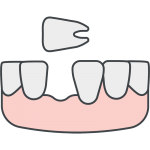
Tooth loss can cause a range of problems from difficulty chewing to a lack of self confidence. When considering replacing a missing tooth or several teeth, we offer the following options for our patients;

  • Dentures (a removable plate with false teeth)
  • Dental Bridge (Attaching a false tooth to an existing tooth)
  • Dental Implants

What are Dental Implants?
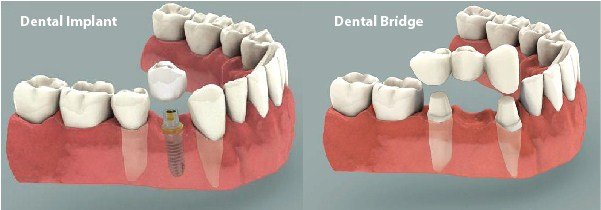
Difference between Dental Implant and Dental Bridge

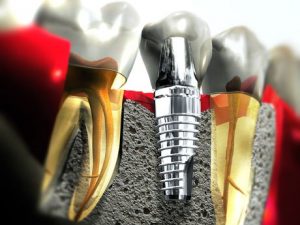
A dental implant is a metal screw that is surgically inserted into the jaw bone to allow a prosthesis – such as a crown or denture, to be attached over it. Implant treatments are considered the next best thing to a natural tooth.

Dental implants work in a wide variety of ways, but these are the most common:

  1. As a replacement of a single tooth
  2. As attachments for retaining loose dentures
🔼 Learn about dental implants

Dental Implants Guide by Aperture Dental Sunnybank Hills

Download your FREE Dental Implants Guide Ebook!

Fill in the form below for your FREE Ebook! All fields marked * are required.

  • This field is for validation purposes and should be left unchanged.
  • This field is hidden when viewing the form

What Happens Before the Dental Implant

Initial Consultation and Comprehensive Assessment

Your dental implant journey begins with a thorough consultation where we gather essential information about your oral health, medical history, and treatment goals. This comprehensive dental implant assessment ensures the best possible outcome for your tooth replacement procedure.

Advanced Digital Imaging and Diagnostic Tests

To plan your dental implant treatment with precision, we utilise state-of-the-art imaging technology to evaluate your jawbone quality, oral health status, and anatomical structures:

Essential Imaging Investigations Include:
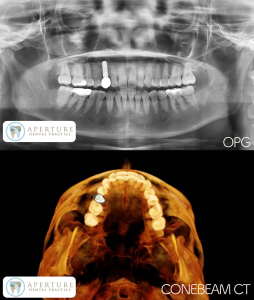
Orthopantomogram (OPG) – A panoramic dental x-ray that provides a complete view of your upper and lower jaws, existing teeth, and bone structure

Cone Beam CT (CBCT) Scan – Advanced 3D dental imaging that creates detailed cross-sectional images of your jawbone density, sinus cavities, nerve pathways, and blood vessels around the implant site

OPG and Cone Beam CT

Medical History Review and Health Screening

Our experienced dental team will thoroughly review your medical background to identify any conditions that might affect:

  • Surgical healing process
  • Blood clotting ability
  • Implant integration success
  • Anesthesia considerations

It’s crucial that you inform our dentists about all medications, supplements, and health conditions, including diabetes, heart conditions, osteoporosis, or blood-thinning medications.


Precision Treatment Planning with Digital Scanning Technology

  • Advanced digital scanning of your upper and lower jaws creates highly accurate 3D models for:
  • Customised implant treatment planning – Determining optimal implant size, position, and angulation
  • Surgical guide fabrication – Creating precise stents to ensure accurate implant placement
  • Temporary restoration construction – Crafting interim dentures or bridges to maintain your smile during the healing period


Ready for Your Dental Implant Surgery

Once all diagnostic assessments, treatment planning, and pre-surgical preparations

  1.  

The Dental Implant Procedure

1. Construction of stents and temporary prosthesis

Surgical Guide

For the implant surgery, and in cases where multiple implants are placed at the same time, it is very important that the surgeon knows exactly where to place the implants in the mouth, and to place them with precision, aligning them parallel to each other. The surgical guide and temporary prosthesis is not required in every case.

Temporary Prosthesis

Generally, healing and bone integration usually takes about 3-6 months. During that time, a temporary prosthesis (e.g. temporary denture) may be required for replacement of front teeth while the implant settles under the gums and bone

The prosthesis acts as protection to prevent undue trauma or pressure on the implant during this healing period, and maintains the space between teeth. Besides, you wouldn’t want to be without a front tooth in your upper jaw for three to six months, right?

2. Placement of the Implants

Dental Implant


Once the temporary prosthesis and stents are ready, you will be ready for insertion of the dental implants.

This procedure takes approximately an hour, depending on the number of implants placed, and if extra procedures are needed, such as extractions, bone grafting or a sinus lift.

Most of the time, depending on how many implants are placed, you will be awake for the procedure. The relevant area for implant insertion will be numbed up. You may feel some vibration during the drilling and placement of the implant, very similar to having a filling done.

Once the implants are in position, the surgical area will be stitched and closed over. Next, the temporary prosthesis will be placed over it.

We then let things heal up over the next 3 – 6 months. Your gums will be stitched over the implants, which remain below the gums, so you won’t see the implants. During this time, the implants will integrate with your jaw bone and the area will heal over.

Not all cases require a temporary prosthesis. If you don’t mind having a missing tooth during this 3 – 6 months period, there is no need for a temporary prosthesis.
3. Impression for the permanent prosthesis

After 3 – 6 months, your dentist will check that the implants are well integrated with your jaw bone – firmly in place, with no loosening, swelling or infection around the area. An x-ray may need to be taken at this point as well.

If all is well, the permanent prosthesis (crown or denture) is ready to be constructed.

This will require a small surgical procedure to expose the tops of the implants for some more impressions. This part of the procedure is a bit technical to explain. So just trust your dentist as he does the impressions.

After the impressions, a little screw-like abutment will be placed over the implant. This time, the abutment will not be covered completely by the gums. The gums will be stitched around the abutment in preparation for attachment of the new prosthesis.

4. Placement of the prosthesis

In a few weeks, when the permanent prosthesis (crown/denture) has been constructed and tried in, it is either screwed, cemented or clipped on to the exposed implant abutment.

Further adjustments may need to be made to the crown or denture, but the dental implant procedure is now complete.

Implant Dentures

Implant dentures present a breakthrough in dental restorative procedures that promote oral health and significantly enhance comfort for the user. 

Unlike their traditional counterparts that rest on the gums, dental implant dentures are carefully secured to dental implants placed in the jawbone. This gives you:

  • Better stability – no slipping or moving around in your mouth
  • More confidence – eat and speak without worry
  • Improved comfort – feels more natural than traditional dentures
  • Preserves jawbone – implants help prevent bone loss
  • Better chewing ability – eat the foods you enjoy


Your Options

When replacing multiple teeth or a full arch, you have three main options:

Implant Retained Denture

A removable denture held in place by 2-4 implants. The denture snaps onto the implants for stability, but you can remove it for cleaning. This is the most affordable implant option.

Implant Supported Denture

A removable denture supported by a bar attached to multiple implants. The bar provides extra support and stability. You can still remove the denture for cleaning.

Fixed Full Arch Bridge 

A permanent, non-removable solution that’s the most stable option. Usually requires 4-6 implants to support a full arch of teeth. Also called All-on-4 or All-on-6. This functions just like natural teeth and never needs to be removed.

An implant retained denture is typically employed when a considerable number, or even all teeth in a dental arch require replacement. Offering two variants: implant supported dentures can be removable, also referred to as ‘snap-on,’ or fixed full arch bridge – a permanent bridge framework to provide a more enduring solution connected by 4-6 dental implants.

In the realm of dental restorations, dental implants offer expansive utility. They can be used to support a single crown, a bridge with multiple connected crowns, or even a full-arch restoration. Fixed implant dentures, in particular, refer to dentures that are not merely supported but also attached to dental implants, providing a more sturdy and reliable oral health solution than conventional dentures.

Dental Implants Brisbane

Do you need to replace your missing tooth? Would you like to know more about dental implants? Whether you need an upper denture, removable dentures, fixed dentures or lower denture, our qualified dentists at Aperture Dental can help even the most complex cases restore their smile.

Contact our friendly team at Aperture Dental Practice on (07) 3132 3848 to find out more. We are more than happy to assist you! Book a dental implant consultation today at our Practice on Compton Road, Sunnybank Hills.

Payment Plans Available

Denticare, National Dental Plan (Humm), Zip Money

Dental Implants Sunnybank Hills - FAQs

What happens after the dental implant procedure?

After your implants are placed, it is extremely important to follow the post-procedure instructions given to you by your dentist. 

It is also important to attend your review appointments as instructed by your dentist. During these appointments your dentist will review your recovery, and ensure the implants are successful. These reviews take place every 3 months with possible X-rays to check bone levels and the implants' integration with your jaw bone.

What are the advantages of dental implants?
  • It is permanent – unlike dentures which flop around, dental implants are integrated into the bone. This means you don’t need to take the implants out at night before you go to sleep.
  • If you have full dentures, attaching them to dental implants will make them 100 x more retentive.
  • High success rate – dental implants have a very high success rate of up to 95-98% and can last a very long time if done well and taken care of.
  • No need to adjust or shave off existing teeth – unlike bridges, the implant stands independent of other teeth, which means no adjustments or attachments to other teeth.
What are the disadvantages of dental implants?
  • Requires a surgical procedure – In order integrate the implant to the jaw bone; it needs to be embedded into position by surgery.
  • Not immediate – depending on the position of the tooth, you may require an intermediate restoration while waiting for integration of the implant.
  • Relatively more expensive than other options, however, as the technology becomes more available and improves, dental implants are getting more affordable.
  • Takes time to integrate to the bone – about 3-6 months, depending on which part of the jaw it is placed.
What are the general risks of dental implants?
  • Bleeding, pain, swelling
  • Non-healing surgical site
  • Non-integration of implants to the bone
  • Damage to important structures – nerves, sinus, existing teeth
  • Peri implantitis – inflammation of the tissues around the implant
  • SMOKING will ensure the failure of your dental implants!
How will my new teeth differ from my natural ones?

Dental implants blend seamlessly with your natural teeth. They look and feel just like your natural, remaining teeth! Apart from the implant tooth” root, implants are incredibly similar to natural teeth.

How safe are dental implants?

As with any surgical procedure, dental implants do pose their own set of risks. However, if performed by a trained and reputable dentist, the procedure and restoration itself are relatively safe.

Am I a good candidate for dental implants?

This will have to be determined by your dentist. Generally speaking, those who are deemed suitable for dental implants have significant bone density in their jaw. This will be determined by an X-ray. You should also be in good oral and general health to undergo the procedure.

Contact Us

Contact us today to talk about our range of complex, cosmetic and general dentistry. Our friendly Aperture Dentists Sunnybank Hills team will be in touch with you soon. We are conveniently located to service patients living in surrounding areas, including Calamvale, Acacia Ridge, Runcorn, Coopers Plains and Kuraby. We are just a short drive for patients looking for a Dental Clinic in Sunnybank, Mt Gravatt and Macgregor regions.

  • This field is for validation purposes and should be left unchanged.