Wisdom Teeth Removal Sunnybank Hills

Wisdom teeth are normally the last set of teeth to develop. They are located at the back of your mouth on your upper and lower jaw.
In some cases, as your wisdom teeth grow, these “third molars” may cause discomfort and thus need to be removed.
Wisdom Tooth Extraction
Not all wisdom teeth need to be removed.
The most significant risk associated with removing lower wisdom teeth is the possibility of affecting the nerve endings responsible for sensation to the lower lip and chin. This nerve lies close to the roots of the mandibular wisdom teeth, which means lower molar extractions can carry a small chance of temporary or, in rare cases, permanent numbness.
This is why our Sunnybank Hills dentists at Aperture Dental conduct x-rays of the four wisdom teeth locations. These x-rays are especially important here to assess the proximity of the nerve to the tooth. How many wisdom teeth need to be removed will be carefully assessed and we will go through our recommendations with you before proceeding.
Wisdom teeth also have variable eruption angles and root shape which can complicate the procedure. A proper assessment with Aperture Dental is required before the tooth is removed.
What are the reasons for the removal of wisdom teeth?
- The wisdom teeth are misaligned during the developing stages.
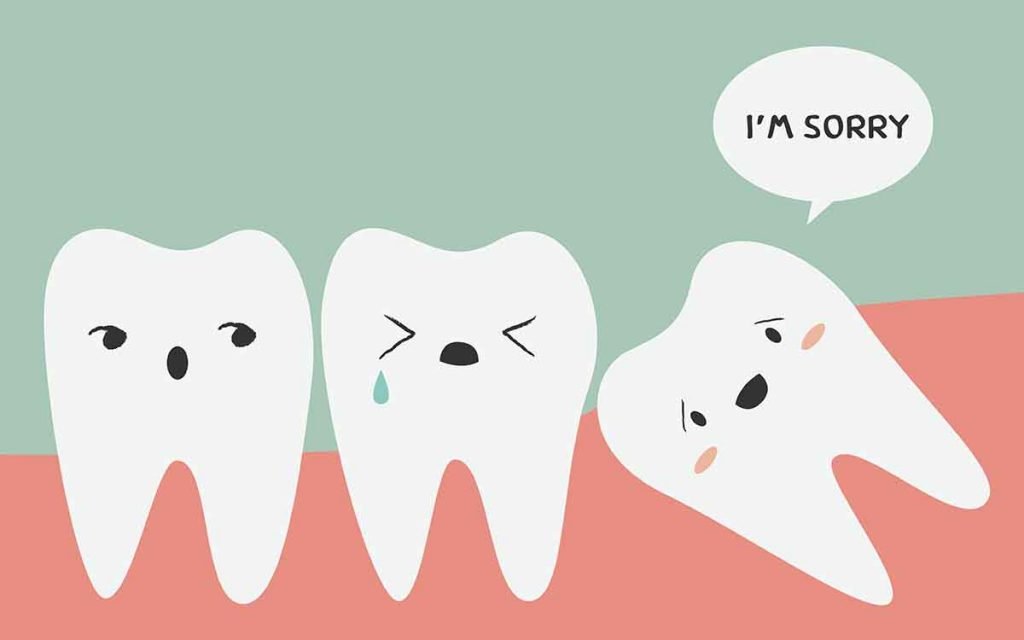
When wisdom teeth don’t grow-in properly, they can be out of position. This misalignment can cause the teeth to press against adjacent teeth, the jawbone, or nerves, leading to discomfort and potential damage.
Removing misaligned wisdom teeth can prevent these complications and maintain overall oral alignment. - Lack of space behind existing molars that may affect the growth of the wisdom teeth.
Often, there isn’t enough room in the mouth to accommodate wisdom teeth. This lack of space can cause the wisdom teeth to become impacted, meaning they are unable to fully emerge or align with the other teeth.
This can lead to pain, swelling, and potential crowding of the existing teeth, making removal necessary to preserve the health of your smile. - Its growth causes risk of damage to neighbouring teeth
Wisdom teeth that grow improperly can exert pressure on the neighbouring molars. This pressure can cause shifting, misalignment, or even damage to the adjacent teeth. Angulated teeth are also more difficult to clean, which can contribute to caries and gum disease around the wisdom teeth.
Removing the wisdom teeth eliminates this risk, ensuring that the rest of your teeth remain healthy and in their proper position. - When your gums become sensitive and painful because the wisdom teeth are trapped
Sometimes, wisdom teeth become partially trapped under the gums, a condition known as impaction. Impacted wisdom teeth can cause the gums to become inflamed, swollen, and you may feel pain.
This can lead to infections or cysts that affect the surrounding tissue. Extraction of the wisdom teeth can relieve the pain and prevent further complications. - Tooth decay
Wisdom teeth are located at the back of the mouth, making them more difficult to clean properly.
This can lead to a higher risk of tooth decay and cavities in these teeth. If wisdom teeth become decayed, they can pose a risk to your overall oral health.
Removal of decayed wisdom teeth is often recommended to prevent the spread of decay to other teeth and to maintain oral hygiene.
Removal of Wisdom Teeth by an Oral Surgeon
The process of wisdom teeth removal can be tailored according to the complexity of the situation as well as the number of teeth that need to be extracted.
There are two main methods: extraction under local anaesthesia (conducted in a dental clinic by your dentist), or a surgical procedure under general anaesthesia (carried out by a specialist oral surgeon).
Local anaesthesia
For straightforward extractions performed at a dental clinic, local anaesthetic is sufficient. This is applicable when the wisdom tooth is straight and has made its appearance through the gum without complications.
Local anaesthesia is applied to numb the area, and patients remain conscious during the procedure. Mild sedation may be an option for those who prefer it. Using forceps, the dentist will then wiggle the tooth loose and remove it, similar to a standard tooth extraction.
For cases where all four wisdom teeth need to be extracted, the removal of the upper and lower molars on one side may occur in one session, with the other side addressed in a follow-up visit.
General Anaesthesia
More complex scenarios where the wisdom tooth is hidden beneath the gum (impacted) or facing other issues (such as obstructive roots) may necessitate surgery under general anaesthesia. Patients are unconscious during the process. It is a day procedure, and arrangements need to be made for transportation post-surgery.
Your dentist will advise you on the most suitable treatment plan and will provide a referral to a specialist oral surgeon should surgery be the recommended route.
Opting for a surgical approach may also be a personal preference for patients wishing to remove all four wisdom teeth in a single session, to avoid future wisdom teeth issues.
Pain relief after Wisdom Tooth Removal
After wisdom teeth removal, there are several ways to manage and alleviate the pain you may feel:
Over-the-Counter Pain Medication:
- Ibuprofen: This non-prescription anti-inflammatory can help reduce both pain and swelling.
- Paracetamol: An effective pain reliever that can be taken if ibuprofen is not suitable for you.
Prescription Medications:
- For severe pain, your dentist may prescribe stronger painkillers. These should be used only as directed and for a short duration.
Cold Compress:
- Apply a cold compress or ice pack to the outside of your face near the extraction site for 15–20 minutes at a time during the first 24-48 hours. This helps numb the area and reduce swelling.
Saltwater Rinse:
- After 24 hours, gently rinse your mouth with warm salt water to help soothe the area and prevent infection. Avoid vigorous rinsing to prevent dislodging a blood clot.
Eating only soft foods:
- Soft, cold foods like yoghurt, applesauce, and ice cream can help soothe the extraction site. Avoid chewing for at least a week near the extraction area to prevent irritation.
Elevate Your Head:
- Keeping your head elevated, especially when lying down, can help reduce swelling and discomfort.
Rest and Avoid Physical Activity:
- Take it easy for a few days after the procedure. Avoid heavy lifting, exercise, or anything that could increase blood flow to the head and exacerbate pain.
Avoid Smoking:
- Smoking creates an environment that makes the open wound heal very slowly, and can cause a painful condition called dry socket.
These methods, when combined, can effectively manage pain while you heal completely after wisdom teeth removal.
Wisdom Teeth Removal Sunnybank Hills
At Aperture Dental, your teeth are our passion! We are here to help if you are experiencing any pain or sensitivity in your mouth, or if you would like some more information about having your wisdom teeth removed. Contact us on (07) 3188 9477 to arrange a consultation!
Wisdom Tooth Removal FAQs
Determining whether you should have your wisdom teeth removed involves several factors. Here are some signs and considerations that might indicate the need for removal:
Signs You Might Need A Wisdom Tooth Removed:
- Pain and Discomfort: Persistent pain or discomfort at the back of your mouth.
- Swelling and Infection: Swelling around the jaw, gums, or an infection in the soft tissue.
- Crowding: Teeth becoming misaligned or crowded due to pressure from emerging wisdom teeth.
- Cysts or Tumours: Development of cysts or tumours around the impacted teeth.
- Decay and Gum Disease: Difficulty cleaning the area, leading to cavities or gum disease.
- Impaction: An impacted wisdom tooth may be growing at an odd angle, appear to be “lying down”, or it may be trapped within the jawbone.
Book in for a consultation with one of our experienced dentists at Aperture Dental in Sunnybank Hills. We will ensure you receive:
- A Dental Examination: We will take X-rays and examine your mouth to assess the position and health of your wisdom teeth.
Professional Advice: Based on the examination, we will provide a recommendation tailored to your specific situation.
To remove your permanent teeth (also known as adult teeth) is a serious decision which must be analysed professionally to ensure the right options are reviewed.
After the removal of wisdom teeth, here's what you can expect:
- Rest: You might feel fatigued or groggy post-procedure. It's important to allow your body to recover, so take the day off and rest.
- Ice Packs: Swelling and discomfort is common after extraction. Applying ice packs can soothe the area and reduce swelling.
- Pain Management: There might be some discomfort once the anaesthesia wears off. Manage this pain with prescribed medication or over-the-counter painkillers. Remember, it's essential to follow the dosage instructions provided by your dentist.
- Diet: Eating might be a bit tricky for a few days after your extraction. Stick to soft, easy-to-chew foods and avoid anything too hot, spicy or crunchy that might irritate the extraction site. You may also want to gently gargle with salt water over the next few days.
- Oral Hygiene: Keeping your mouth clean is essential to avoid any complications or infections. Your dentist will provide detailed instructions on how to clean your mouth while ensuring the extraction site isn't disturbed.
It's important to note that every individual's recovery varies. If you'd like more detailed information about wisdom teeth extraction or have concerns about post-procedure care, don't hesitate to reach out to our Aperture Dental team.
It is vitally important that you don't ignore your wisdom teeth! If left unexamined, these hidden culprits could wreak havoc in your mouth. Impaction, infection, and damage to adjacent teeth are all potential outcomes, silently building up in the background unnoticed.
Without our professional advice and timely removal, these issues can escalate into far more serious problems, causing considerable discomfort and potentially affecting your oral health dramatically.
Infections can spread, leading to abscesses or, in the worst-case scenario, sepsis, a life-threatening infection that can spread throughout your body.
Impacted wisdom teeth can also cause cysts to form, damaging your jawbone and surrounding tissues. Damage to nearby teeth is, unfortunately, an often-overlooked consequence, prompting cascading issues like tooth decay, gum disease, and even tooth loss.
By failing to get your wisdom teeth examined and removed based on our professional advice, you might find yourself signing up for more painful and expensive dental complications in the future.
Don't let negligence overpower your wisdom. Protect your smile, maintain your oral health, and save your future self from unnecessary dental distress. Get in touch with Aperture Dental for detailed advice, or book a consultation today.
For a smooth recovery after wisdom teeth removal, it's generally recommended to take at least 2 days off from work or school, including the day of your surgery. This allows you time to rest and manage any pain or swelling that may occur.
If your job involves physical exertion, such as heavy lifting or strenuous activities, it's wise to consider taking 3 to 4 days off to avoid complications and ensure proper healing.
Additionally, it’s important to listen to your body and gradually ease back into your daily activities. Pushing yourself too soon can lead to prolonged discomfort or even disrupt the healing process.
If you're unsure how much time you'll need, check in with your Aperture Dental consultant for personalised advice based on your specific situation.
Sometimes it may be recommended to remove wisdom teeth before having certain orthodontic treatments. Here at Aperture Dental Practice, we are able to give you the best advice based on your individual situation.
If your situation is complicated, we may advise delaying orthodontic treatment, like braces or clear aligners, until these complications are resolved.
A common complication is impacted wisdom teeth. These teeth can cause further misalignment as they grow, which may complicate your treatment. In this case, you may be given the advice to have them removed.
This recommendation also applies if your wisdom teeth haven’t erupted yet but are likely to grow in a way that could cause issues. X-rays can help determine if this might be a concern.
Yes, you can brush your teeth after having your wisdom teeth removed, but you need to be cautious around the extraction sites. Here are some guidelines:
First 24 Hours:
- Avoid Brushing: Do not brush your teeth, especially near the extraction site, during the first 24 hours after surgery to allow the area to heal and avoid dislodging the blood clot, which could lead to a painful condition called dry socket.
After 24 Hours:
- Resume Gentle Brushing: You can begin brushing your teeth gently, but avoid the areas directly around the extraction site. Use a soft-bristled toothbrush and avoid vigorous brushing near the affected area.
- Careful Cleaning: You can brush the remaining teeth as usual, but be careful to not disturb the healing sites. Tilt your head to avoid brushing too close to the stitches or open sockets.
Contact Us
Contact us today to talk about our range of complex, cosmetic and general dentistry. Our friendly Aperture Dentists Sunnybank Hills team will be in touch with you soon. We are conveniently located to service patients living in surrounding areas, including Calamvale, Acacia Ridge, Runcorn, Coopers Plains and Kuraby. We are just a short drive for patients looking for a Dental Clinic in Sunnybank, Mt Gravatt and Macgregor regions.